
I found this display in the wine tasting room of Solms Delta, a popular wine estate just outside of Franschhoek.
I found this display in the wine tasting room of Solms Delta, a popular wine estate just outside of Franschhoek.
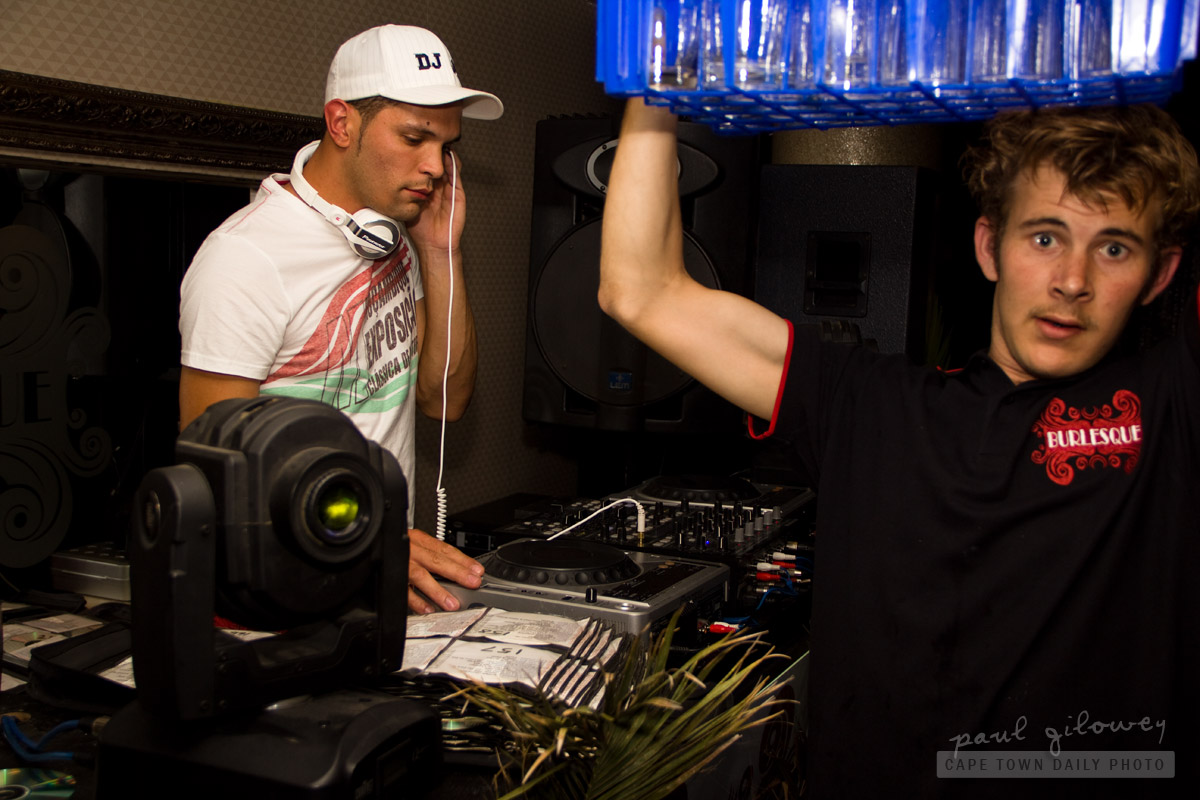
I don't frequent the strip of clubs and bars in Edward Street (map), however, I found myself at Burlesque shooting pics, and in so doing learned a few interesting things about Edward Street's party-goers and the clubs they visit:
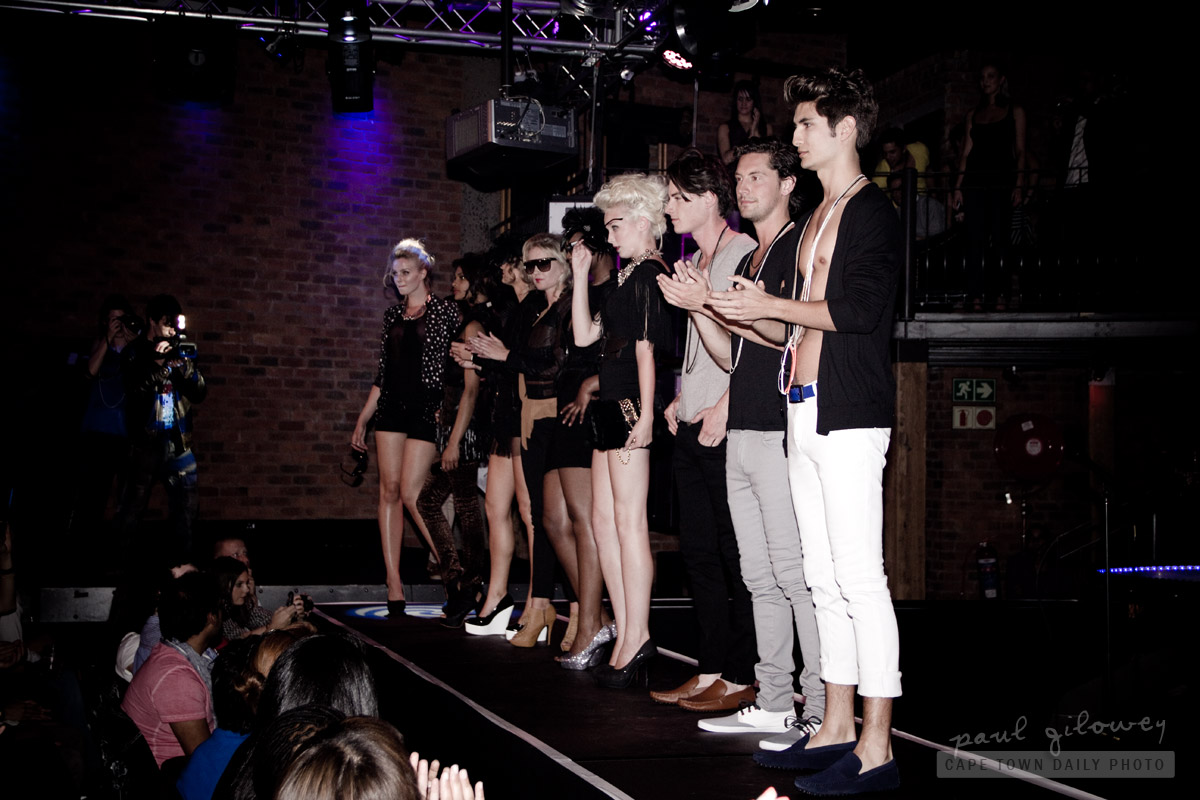
I, and a few hundred other folk, spent the evening at Trinity Supperclub (a restaurant in Cape Town) being entertained by DJ's and treated to delectable chocolate delights from Café Le Chocolatier in Franschhoek. After a little patient waiting the first of the 10 models descended from an iron staircase to the catwalk to display some of what Traffic Clothing's store will be stocked with for Summer.
If you'd like to see a few more photos (besides for those below) - I've uploaded a few of the models in action to a Facebook album here.
View my article about Traffic's 2011 Winter Collection for info on where and how to buy Traffic's designer gear.

Each of the five horses has a trumpet-like piece of aluminum protruding from their mouths and from beneath their tails (see the pics below). What the photos don't show is that the five horses are interconnected by underground tubes that help convey sound. The idea is for pairs of people to work out which trumpet is linked to which other trumpet by speaking and listening.
These strange horses reminded me of another strange horse whom you may like to follow on Twitter.

Click on the photo to see the large version - isn't the fluffy liddl' gosling cute? :)
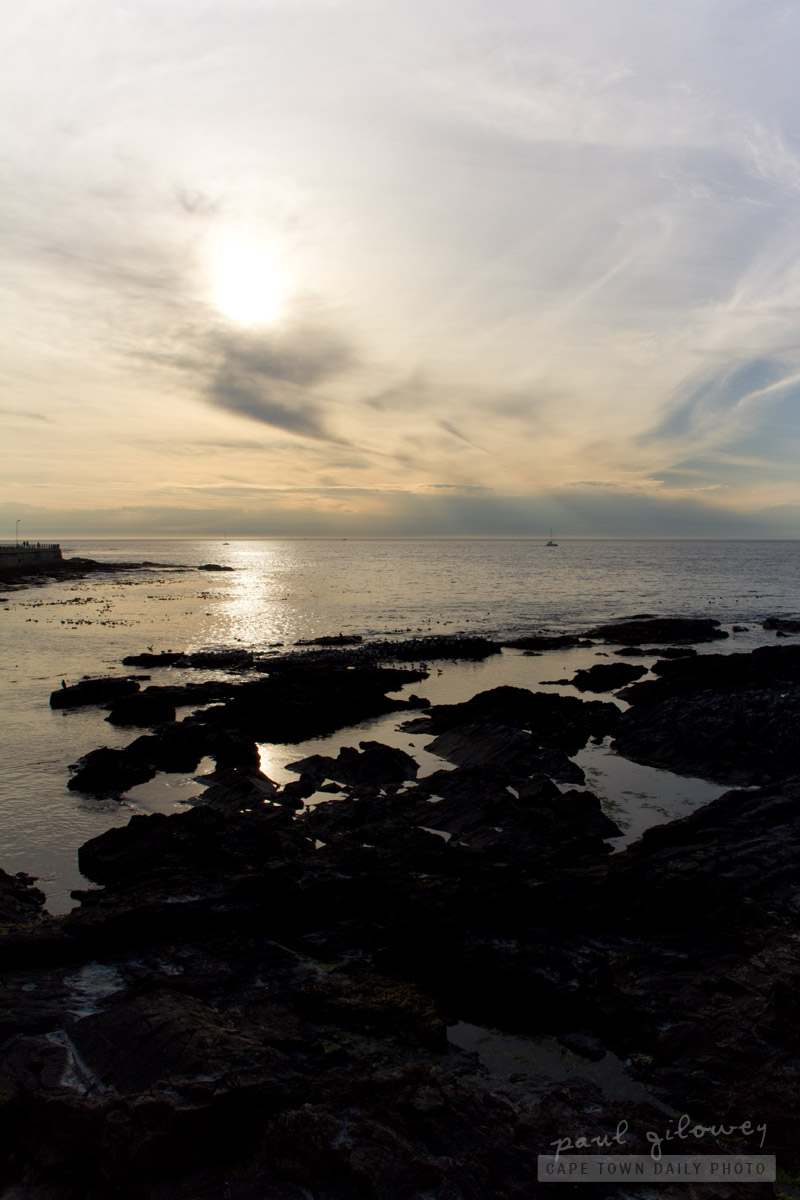


Even though it's extremely rocky the little section of beach looks to be quite protected from the ocean at low-tide and seems perfect for young kids, be careful to keep a close watch on them - the ocean get's pretty fierce pretty quickly and the rocky outcrops make it very easy for even young kids reach this danger zone.
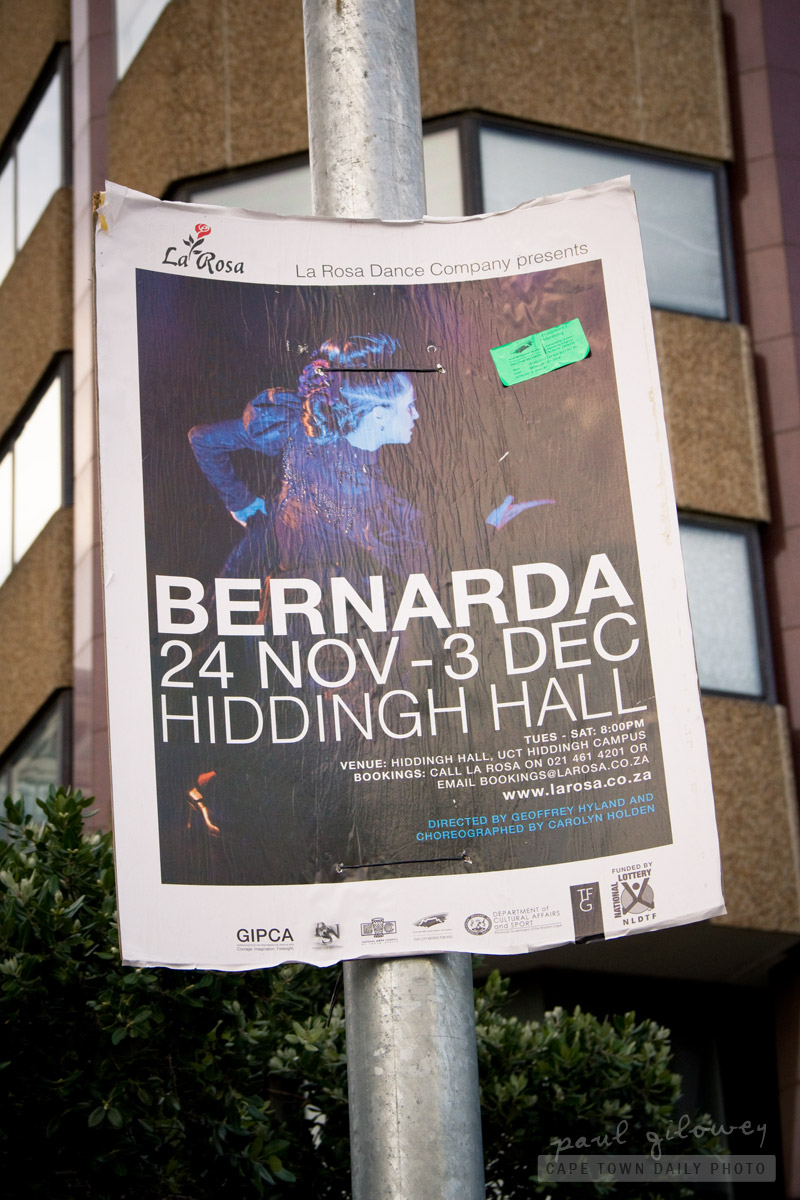
The cost is a mere R80 and you can book through La Rosa directly by calling 021 461 4201 or emailing bookings@larosa.co.za.

Alex commented on yesterday's post mentioning that the mayor of the day named the street was named after Sir Charles Adderley in 1850 to show honour to him for successfully convincing the British government not to turn Cape Town into a penal colony - like they did Australia.
Big-up to you Sir Adderley! :)

You'll find this little gem flowing right down the middle of Cape Town's main street, Adderley Street.
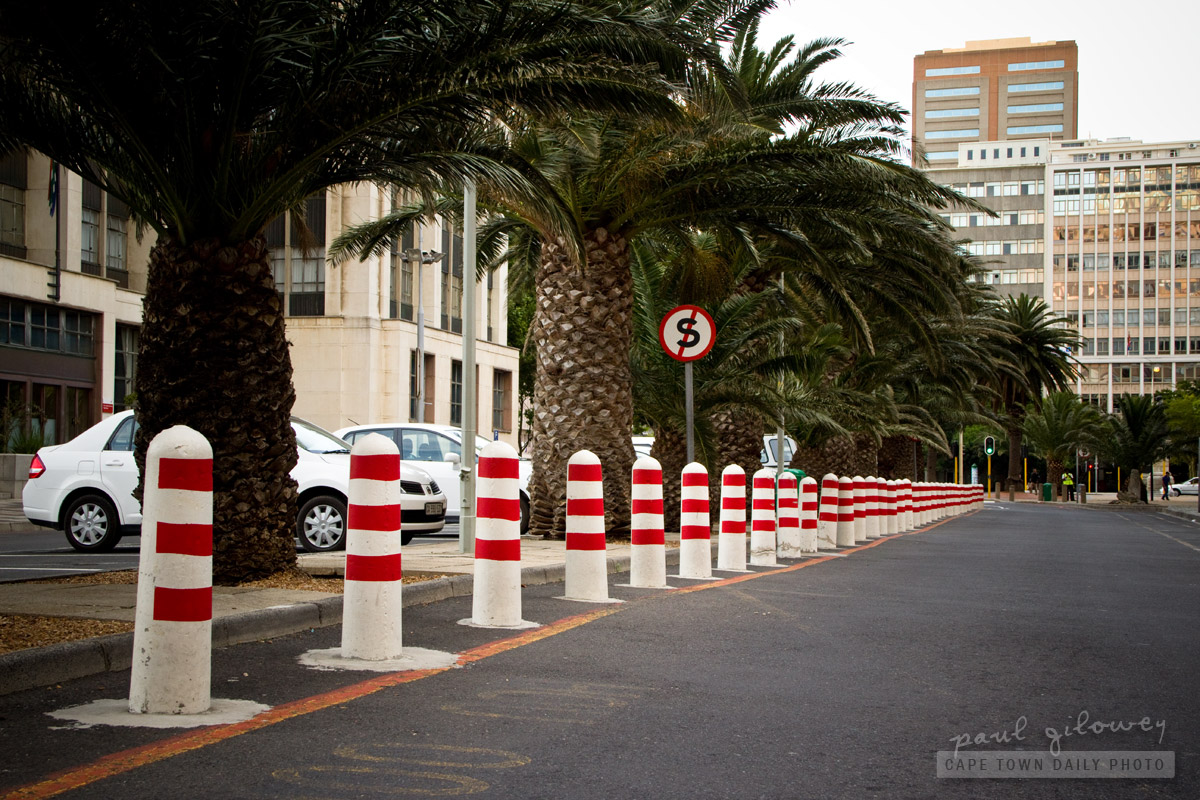

What I could find out is that the work was commissioned from the renowned South African artist, Edoardo Villa, in 1981. What's interesting is that in 1981 the National Party won a majority of the seats in government, 131 of the 165 seats. I wonder if the work was commissioned to commemorate this event?

Even though Jan and his crew weren't the first people on our shores he was the first "Westerner" to set up a formal settlement here, and in colonial-times that made him Commander of the Cape of Good Hope, a position that he held for 10 years from 1652 until 1662. Interestingly (and perhaps because of all the friends he made while stationed in Cape Town) Jan retired to Jakarta where he passed away in 1677.

Personally, I think it's pretty smart of the company to encourage their staff to work off the extra kilojoules added by the overtime-pizza run. :)
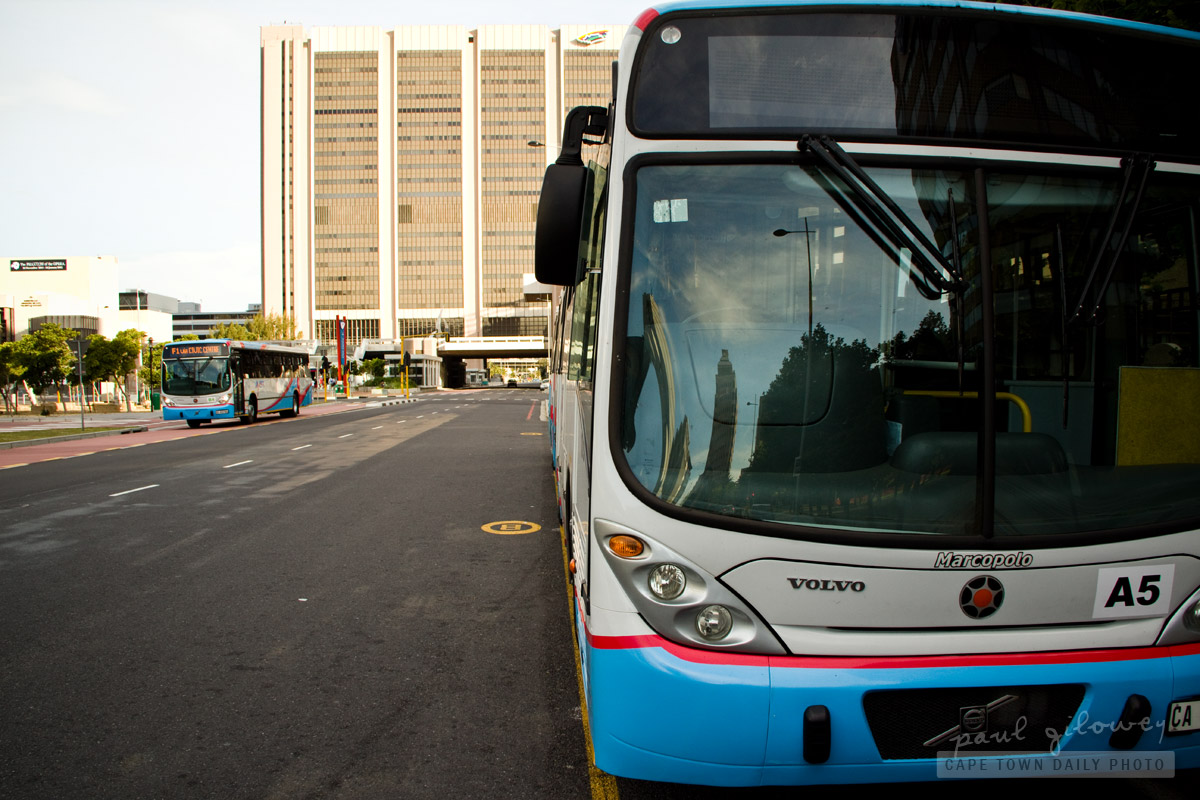
While kids below the age of 4 travel free of charge the 2011 fare for adults is R53 and R25.50 for kids up to the age of 11.
Note that the site's menu system is broken and currently doesn't work in Chrome - but fortunately does in Firefox and probably most other browsers.
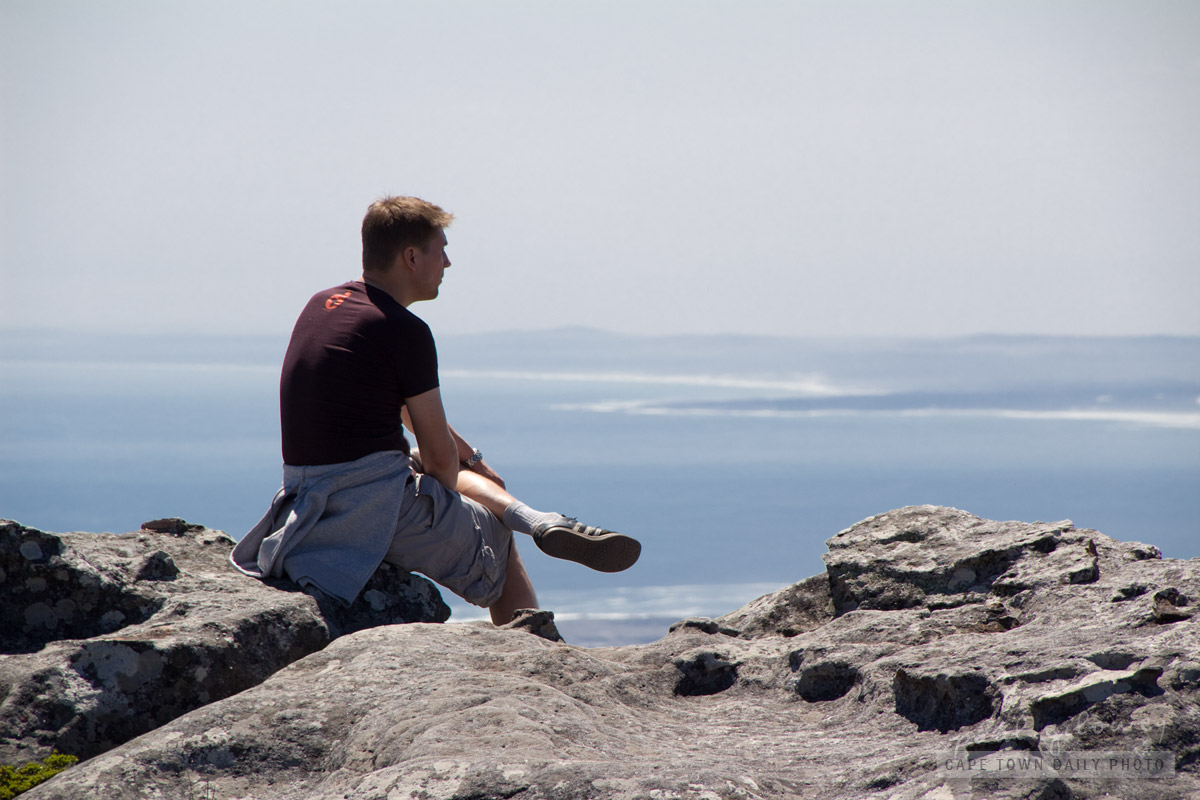
I've spent a lot of time looking out over the peninsula from this vantage point and it never ceases to wonder me that 260 million years ago the top of Table Mountain was at sea level. How weird is that?!

The Official New7Wonders of Nature was established to raise awareness of the diversity and beauty of nature in a hope to increase tourism and hence funding to preserve the natural beauty of landmarks like Table Mountain.
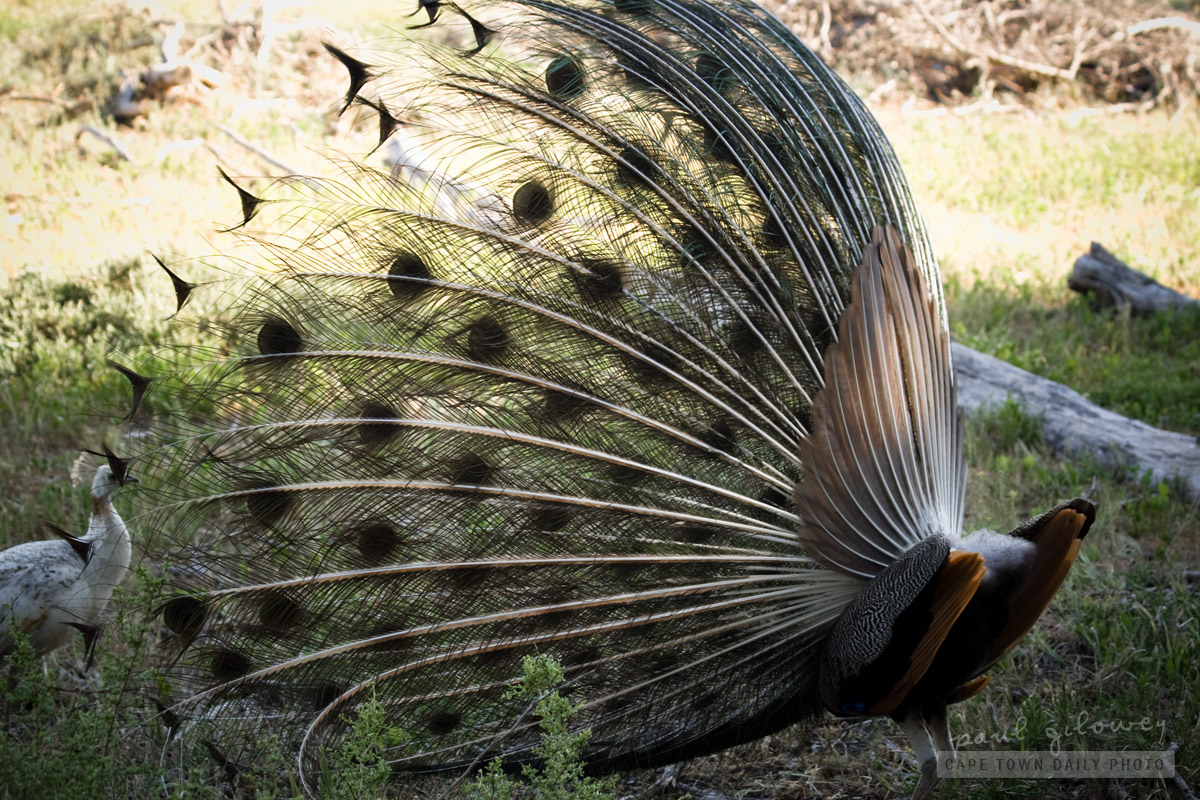
According to the study it's what the peacock says that makes all the difference. I have reason to believe this may too apply to the human race.

I read something interesting about the origin of sheep in Southern Africa. Apparently there's no evidence to suggest that there were any sheep in Southern Africa 2000 years ago! It's believed that the Khoi-Khoi people (who migrated from central Africa) introduced us to the wonders of lamb and mutton! Now don't we all just love the Khoi-Khoi? Of course we do! :D
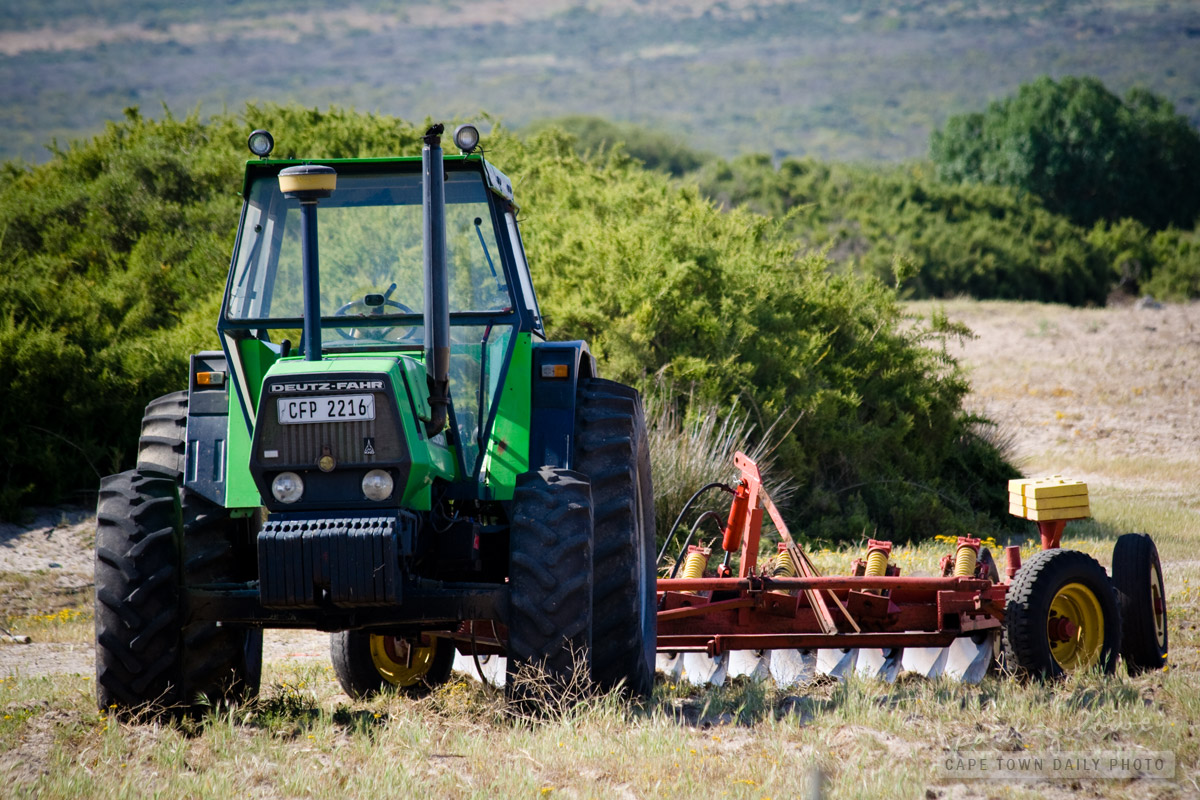
In stark contradiction to the area's agricultural strength, the West Coast fishing industry booms with the seas along this stretch of coast teeming with Snoek, Cape Lobster, abalone, calamari, octopus, oysters, mussels and more.
If you like areas with hot and dry weather, plenty of fish, and a relatively low number of people per square kilometer - then our West Coast certainly is the place for you! If not, try the East Coast garden route. :)
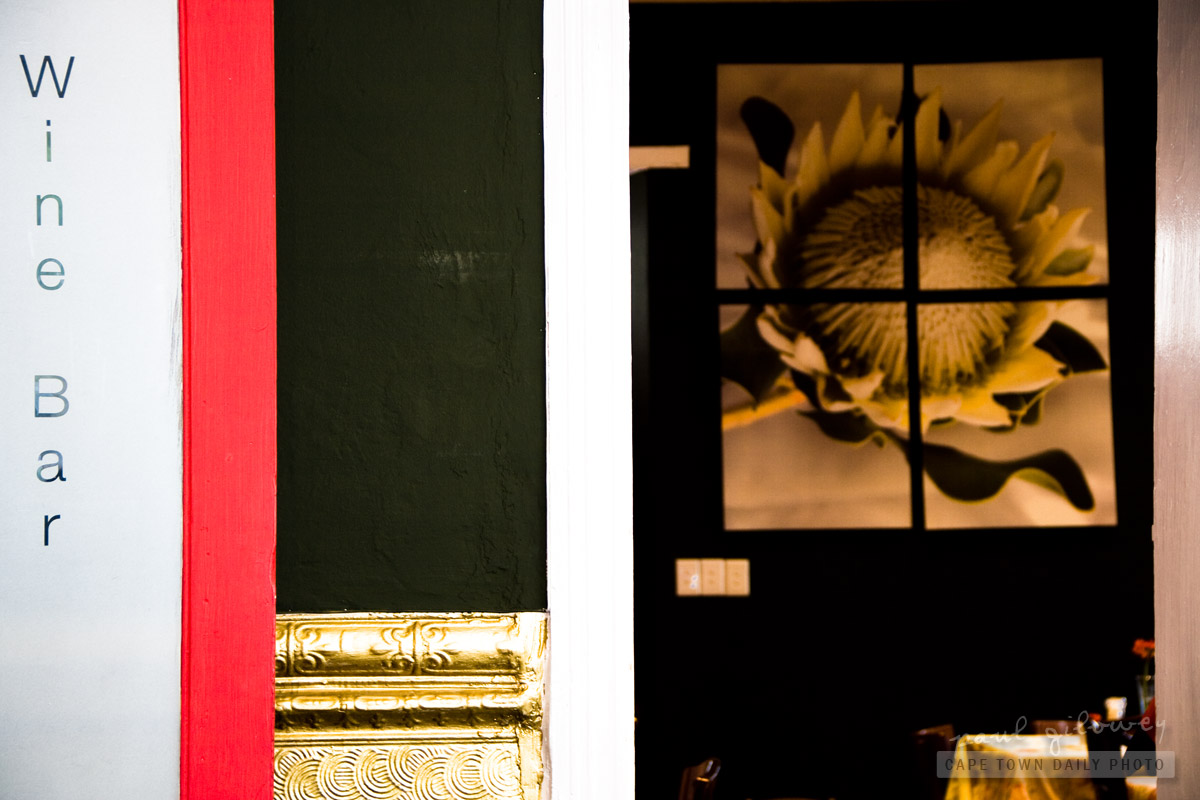
Kikka's food was delicious, the coffee was good, and the atmosphere created by the beautiful decor and French background music made it the perfect spot for afternoon tea. We'll certainly return on our next trip to Paarl. :)
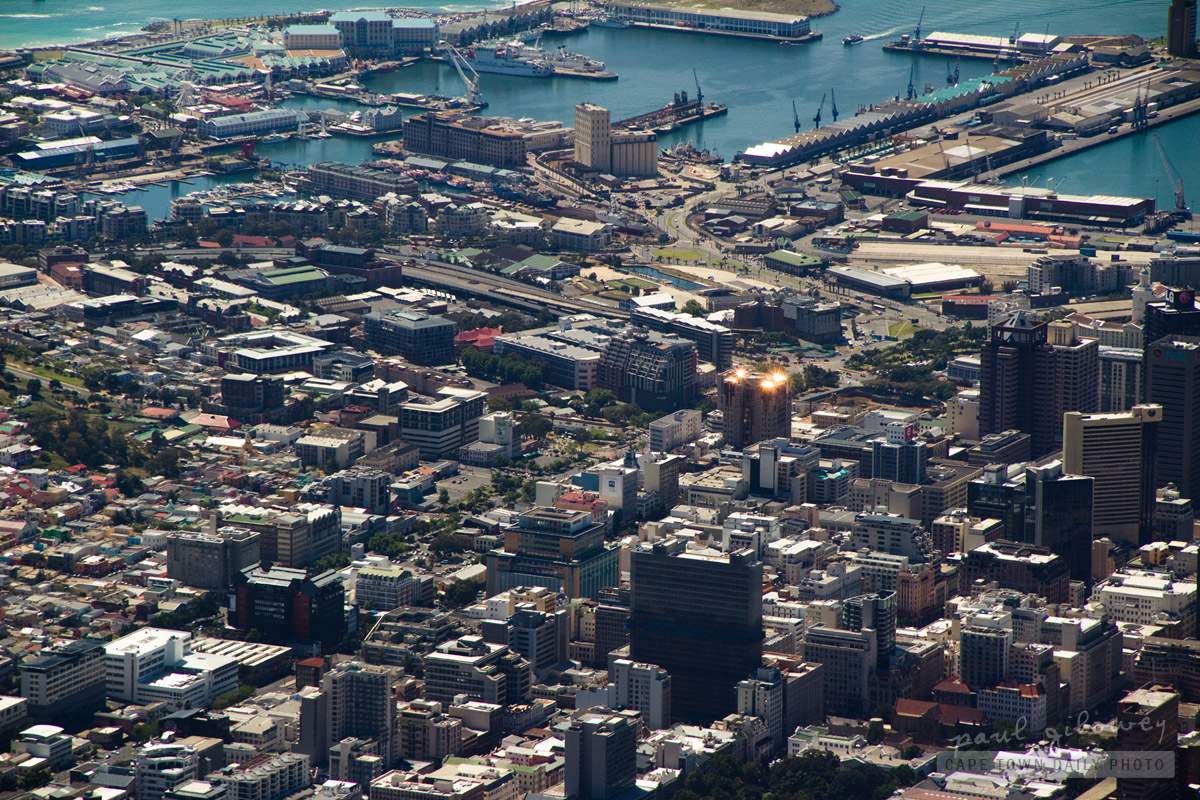
If you're unfamiliar with Cape Town, then for reference, that's the V&A Waterfront in the top left corner; the colourful houses on the left (towards the bottom) are in an area known as Bo Kaap; and the CBD is slightly larger than the lower right quarter of the photo.
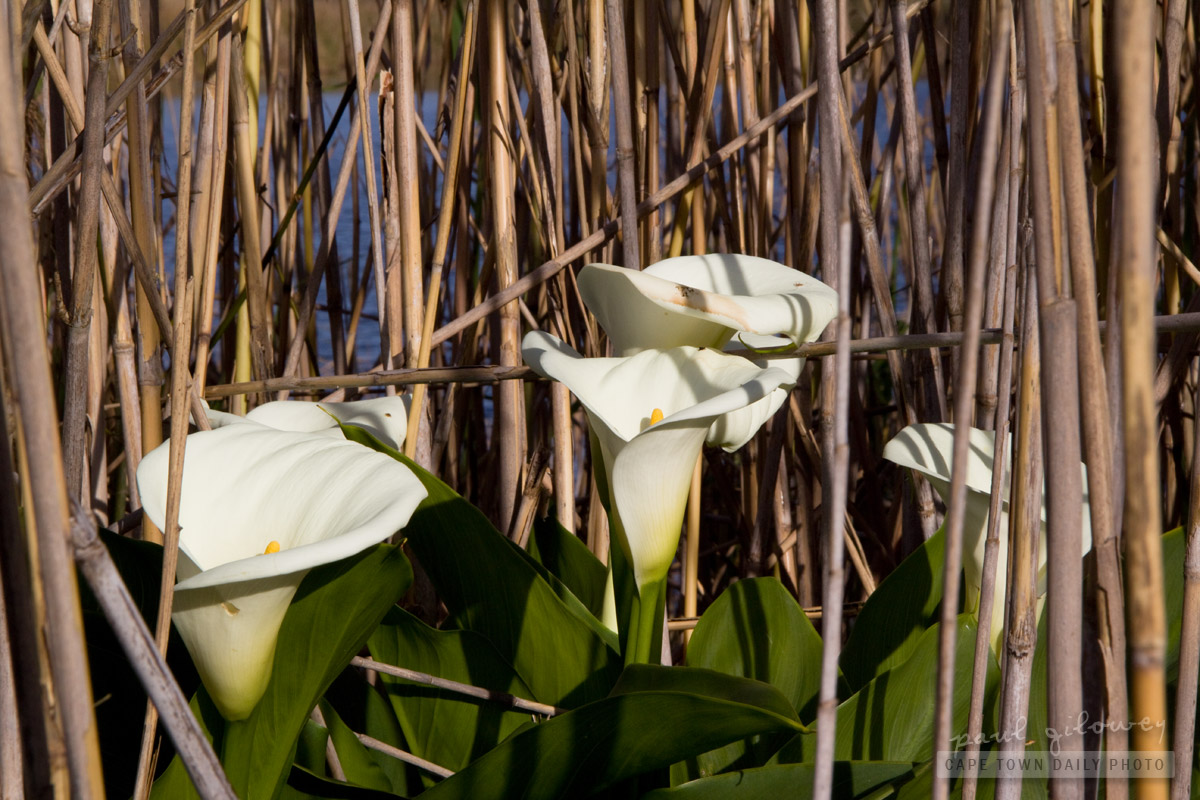
An amusing fact that I discovered was that the Arum Lily is called a Varkoor (translated as Pig's Ear) in Afrikaans. Could the English and Afrikaans names have more contrasting meaning?! Purity, elegance, and a pig's ear. :)
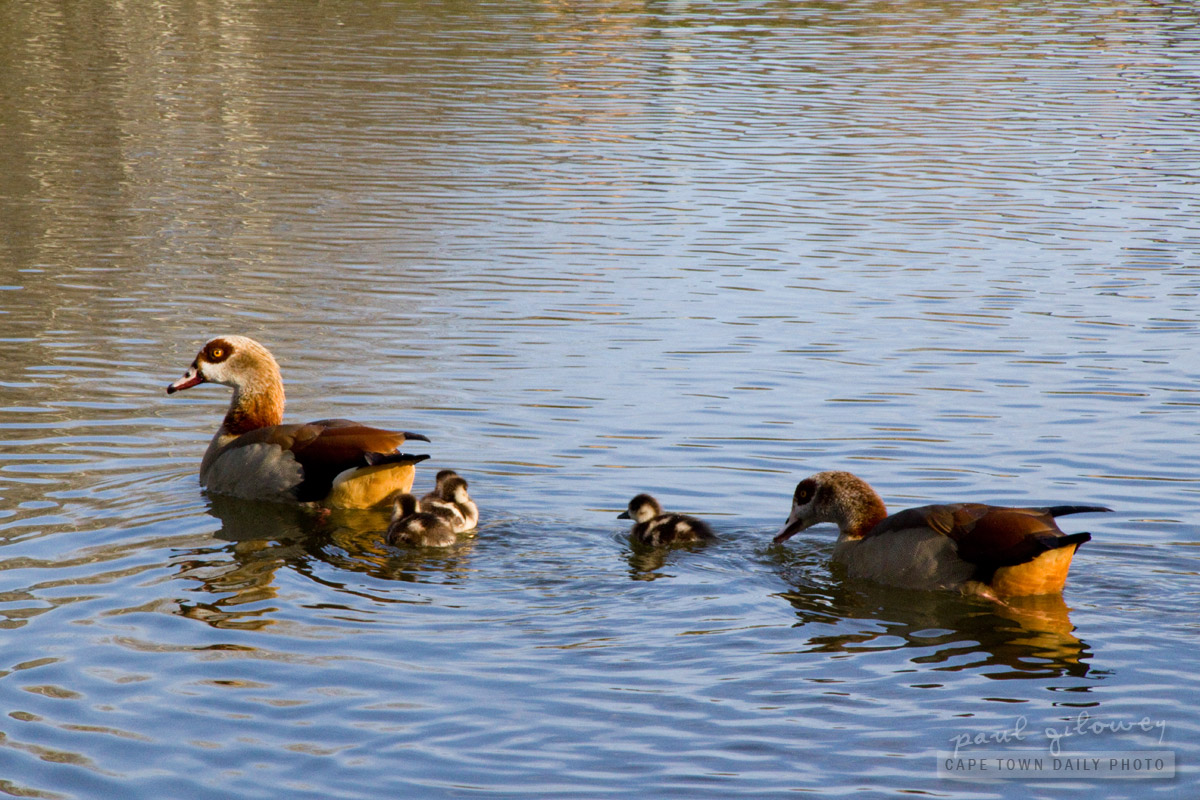
The dams in the Durbanville area (Sonstraal dam and Vygeboom dam) use to be surrounded with green grass and were previously home to families of the ordinary white ducks and geese. Over a period of a few years Egyptian gees started nesting in the area and soon overtook their white neighbours in number and appeared to push them out of the area. I remember watching the birds for some time and observing that the Egyptian gees appeared more hostile whereas the white ducks just looked clumsy and meek.
Today there are hundreds of Egyptian geese in the area and since they typically eat grass, leaves and seeds, it appears as though their sheer number overgrazing has rendered the once-green grassy areas barren and sandy. It's sad really - those two dams specifically use to be such beautiful places.
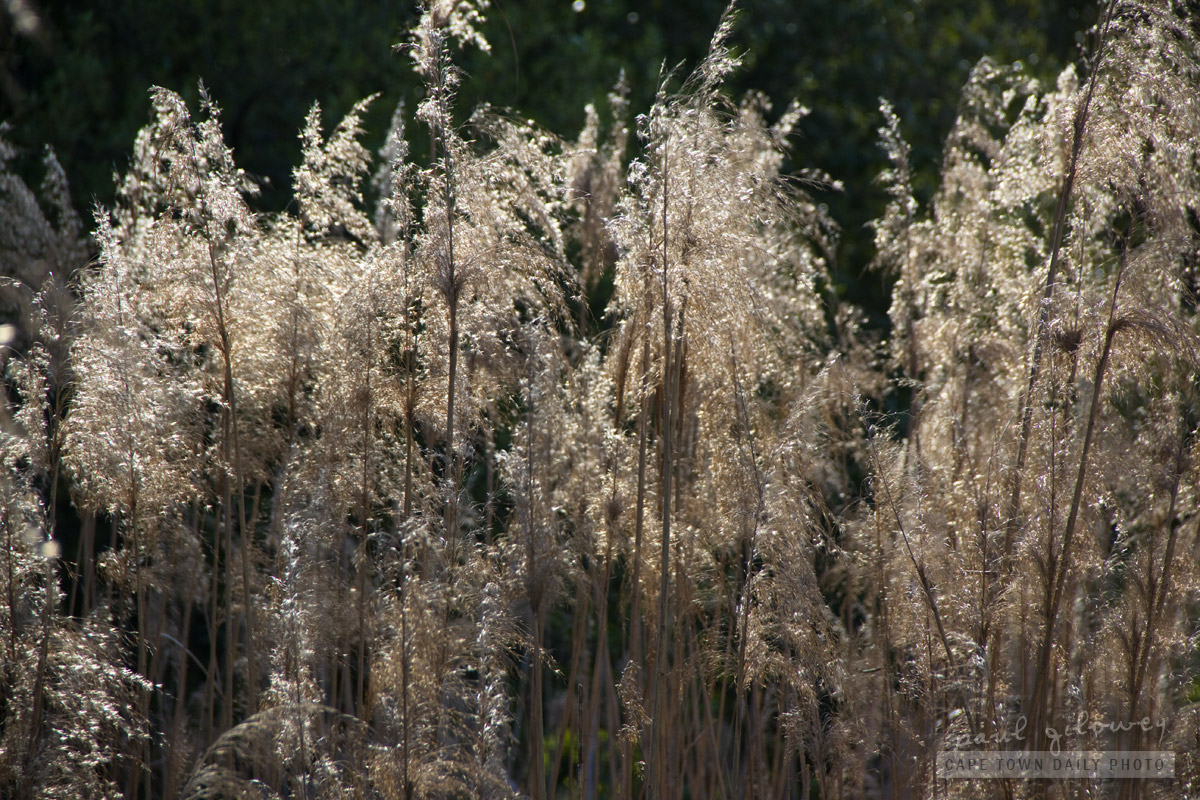
If you're planning on visiting Cape Town between now and the end of the year, and if you're one of those effected by pollen - be sure to bring along a small stash of antihistamines. :)

Have you taken time to consider how different your life could have been if you, say, hadn't taken that job; or you'd grabbed that opportunity to travel abroad; or if you had stopped at that red traffic light? Wouldn't life be awfully interesting if when you reached the end of the road you had an opportunity to live it all over again?
I took this photo at the Majik Forest in Durbanville.

In 1899 the second Anglo-Boer War broke out which resulted in the two republics being incorporated into the British Empire.
Due to the title of this post you've probably gathered that there's a relationship between barbed wire and the Anglo-Boer war. Allow me to explain: Barbed wire was developed in 1860 to keep livestock from wandering into neighbouring properties. It's use spread from France to America and was later used for military purposes in the Spanish-American War during the Siege of Santiago.
The British armed forces must have learned from this as only a year after the Seige of Santiago did they use barbed wire to build the infamous concentration camps that kept the Boers wives and children captive.

One tip - if you're not keen in queuing to catch your car, then it's best to either go early (when they open at 11am in the week and 9am on the weekend) or about an hour before closing time, which is 6pm.