
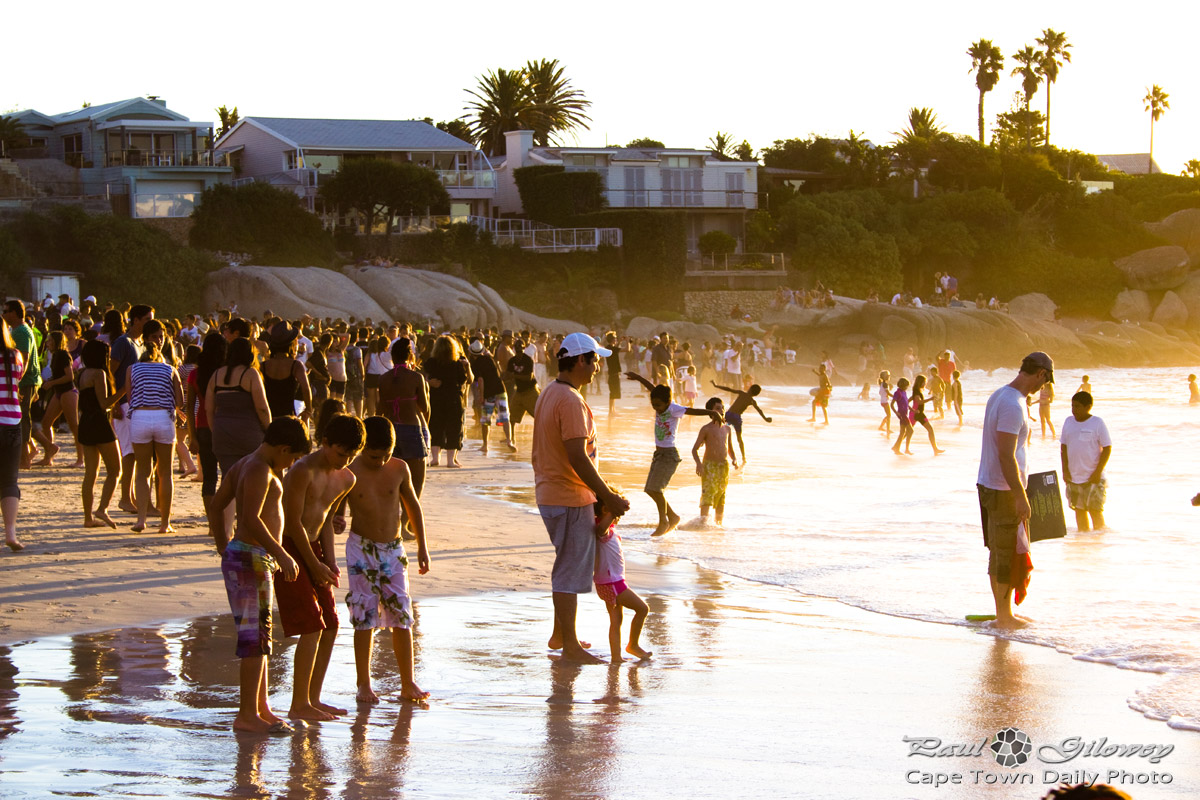
After several minutes the guys caught sight of the lifeguard, realised that it was getting dark, and headed back to shore.
After several minutes the guys caught sight of the lifeguard, realised that it was getting dark, and headed back to shore.
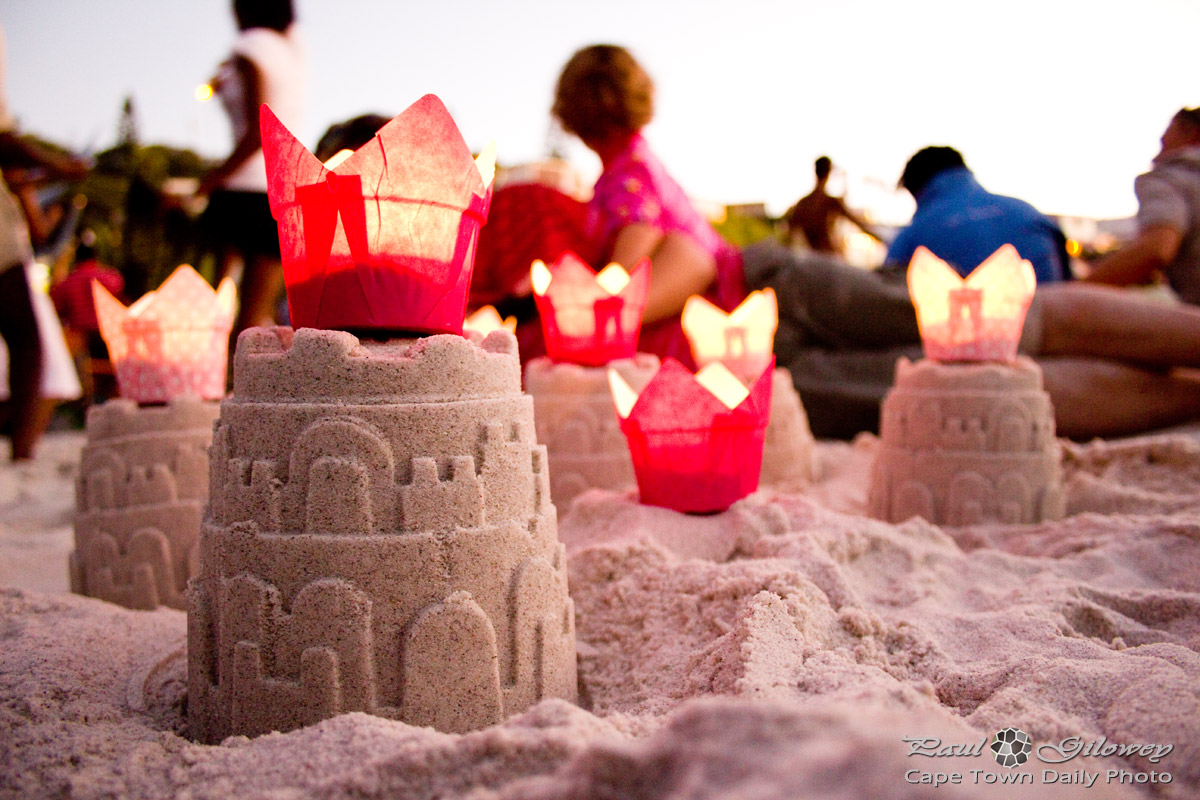
It's kinda tradition that in summer folk sit on Clifton beach with candles until late in the evening. It's really beautiful and something that you should try to do if you visit Cape Town around this time of the year!
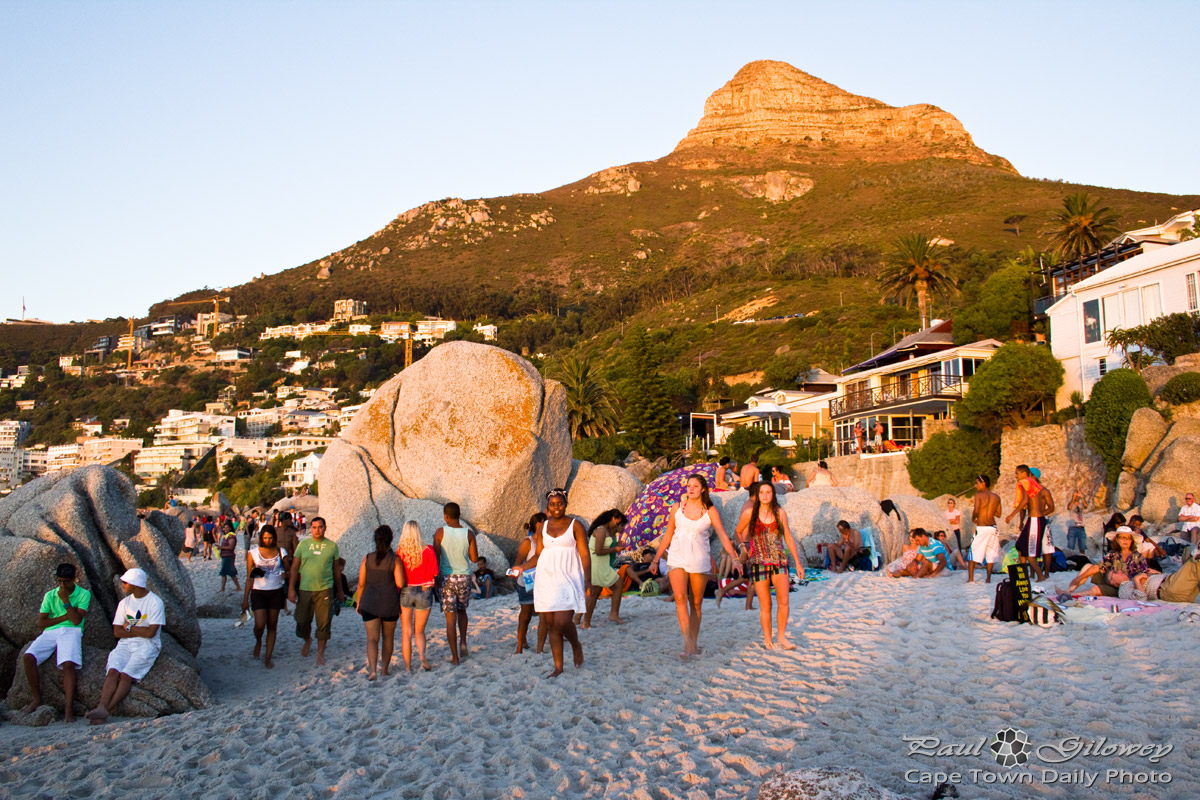

I fit into the middle group, which (to be honest) is a fairly sizable group! In South Africa, like most other countries, we have a huge difference in wealth between the poorest and the richest. The good thing though is that it seems (to me at least) that the curve is flattening slightly. While we still have the very rich, and very poor, it seems like the wealth in the middle group has (over the last 10 or 20 years) spread out a little.
Or, fellow South Africans, is that my perception only?


Read more about Cape Talk, the NSRI, and Moonstruck in my previous post.
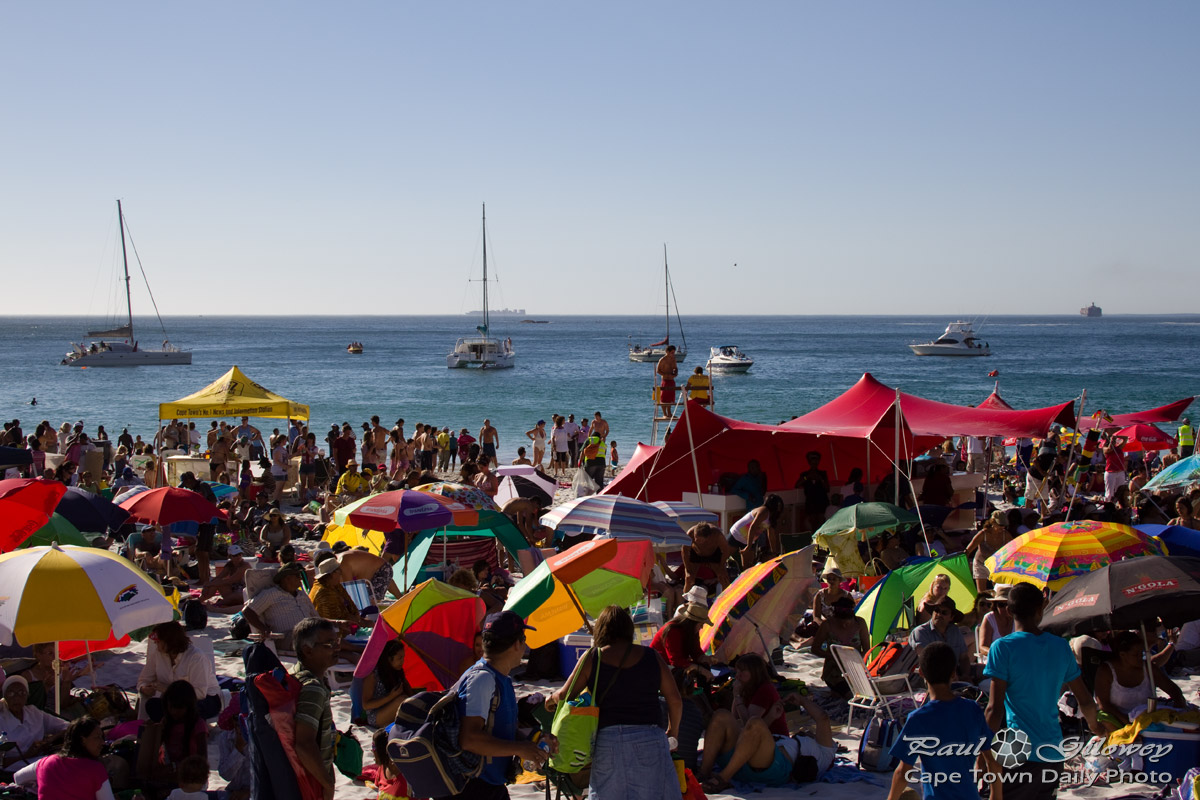
In case you're wondering, Moonstruck isn't only about the awesomeness of a huge beach party. The event is run to raise money for the National Sea Rescue Institute, better known as the NSRI. I've written about the work that the NSRI do a couple of times - read more about the organisation, and how you can help, here and here.
I'll post a few more photos tomorrow, but right now it feels like my eyelids are flapping around my knees and it's become apparent to me that it's probably time call it a night. 'Night folks! :)
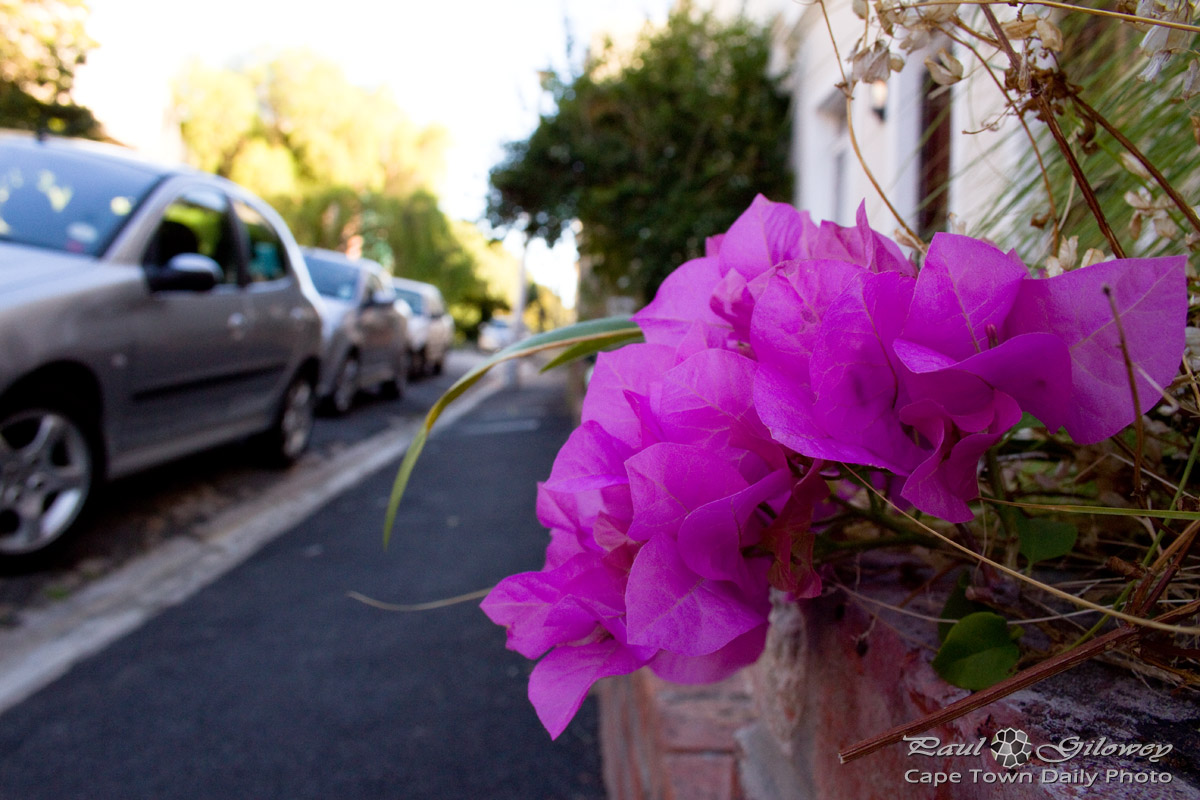
The Bougainvillea is very common in gardens all over our province. They're most often this purple-pink colour, but sometimes you'll find ones with orange or even white flowers. The reason for me referring to them as evil tyrants of the garden is that they grow like demons and bear long, hard, sharp thorns that cause their victim to itch for hours after being pricked. Also, they tend to makes gardens look extremely messy once their pretty purple bits fall to the floor as ugly semi-translucent pieces of brown.
I have a love/hate relationship with the plant. And, for what it's worth, we have three in our garden. I have nightmares. :)
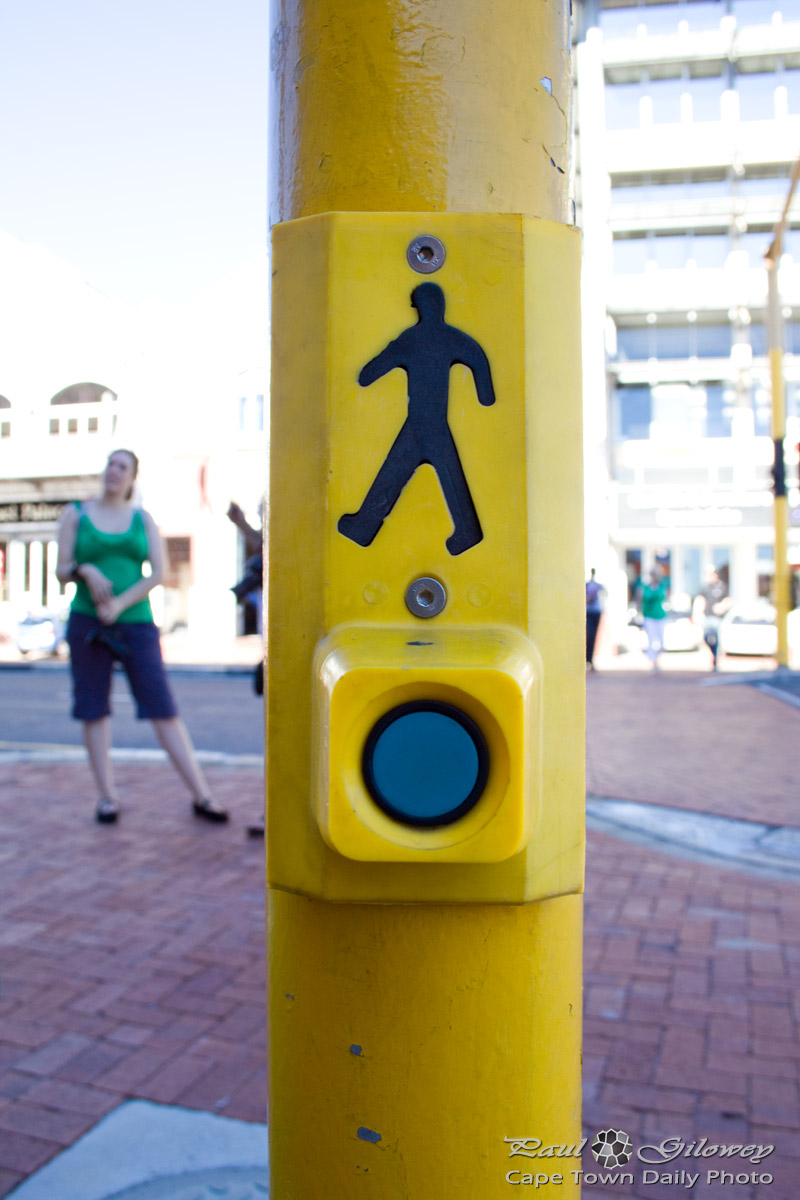
The photo reminds me of the people who I often see waiting at large intersections selling copies of The Big Issue. If you've visited Cape Town you, for sure, must have seen them too.
The Big Issue is 15 years old today, they've published 192 editions and have helped hundreds (probably thousands) of people get back on their feet. Now that's something for a non-profit public benefit organisation to be proud of!
The Big Issue employs homeless and unemployed people as vendors on a profit-sharing basis, sharing 50% of the retail cost of the magazine with the vendor. Instead of giving these people a once-off meal or a place to sleep, The Big Issue help them take charge of their lives by giving them a way to earn money. Each time you spend R18, R9 goes to the vendor and the rest gets funneled back into producing the magazine. Isn't that an awesome concept?

On the sticker below the heart stands the word "tjips" which is an Afrikaans Anglicism of the English word "chips". Incidentally, the Afrikaans version is pronounced pretty much the same as it's English counterpart except that you almost spit the word out, holding the tip of your tongue lightly to the front of your palate.
Now, isn't that a strange sticker? :)



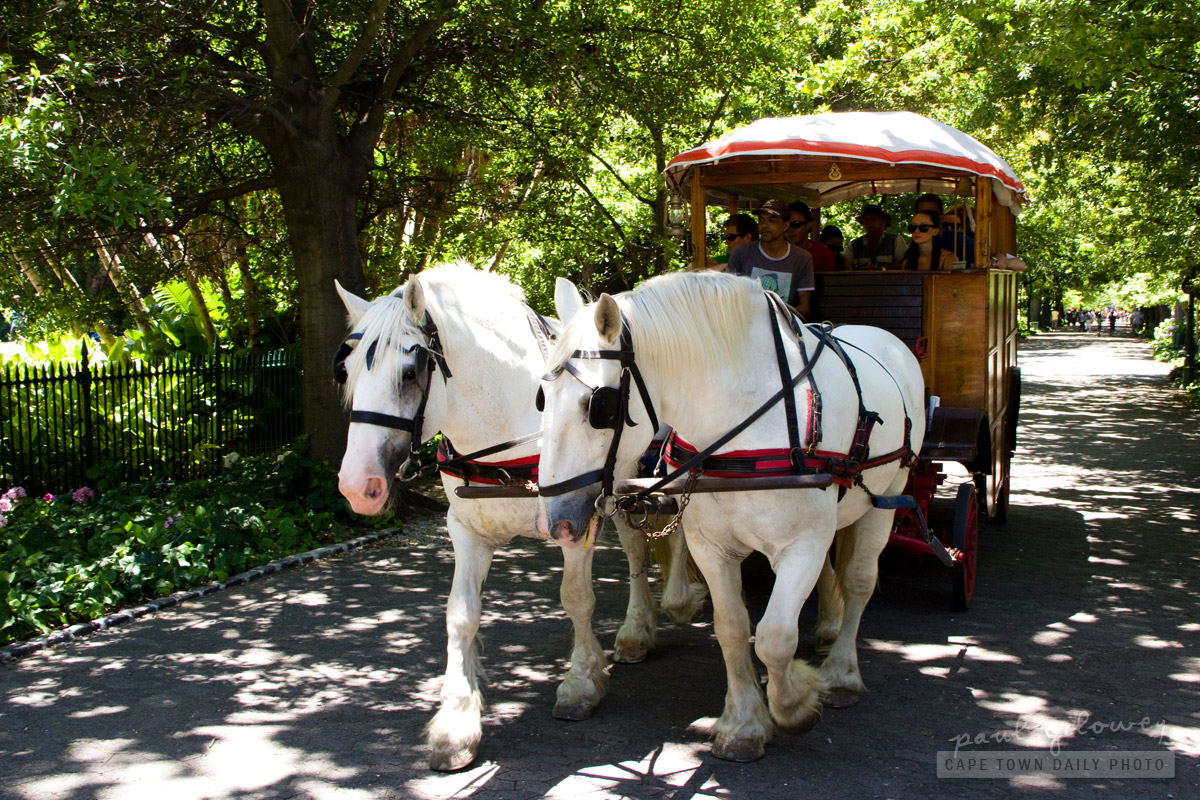
We're on the brink of Valentine's day, so guys, if your date loves horses then perhaps you should take her on a carriage ride. Chat to the Cape Town Carriage Company, I'm sure they'll be happy to be at your service. :)
Due to their size and strength these French Percherons were used as war horses in the day's of infamous crusades. Knights of old use to wear huge metal armor, carry large metal shields, and wield massive broadswords, so I guess it's obvious then why these 1000kg beasts were the obvious choice.
As time progressed and knighthood became boring, people started using Percherons as work horses, primarily in agriculture, often used to pull heavy ploughs through fields, draw carriages, and pull artillery around for the military.
Today these lovelies live a far more relaxed lifestyle under the care of the Cape Town Carriage Company. :)
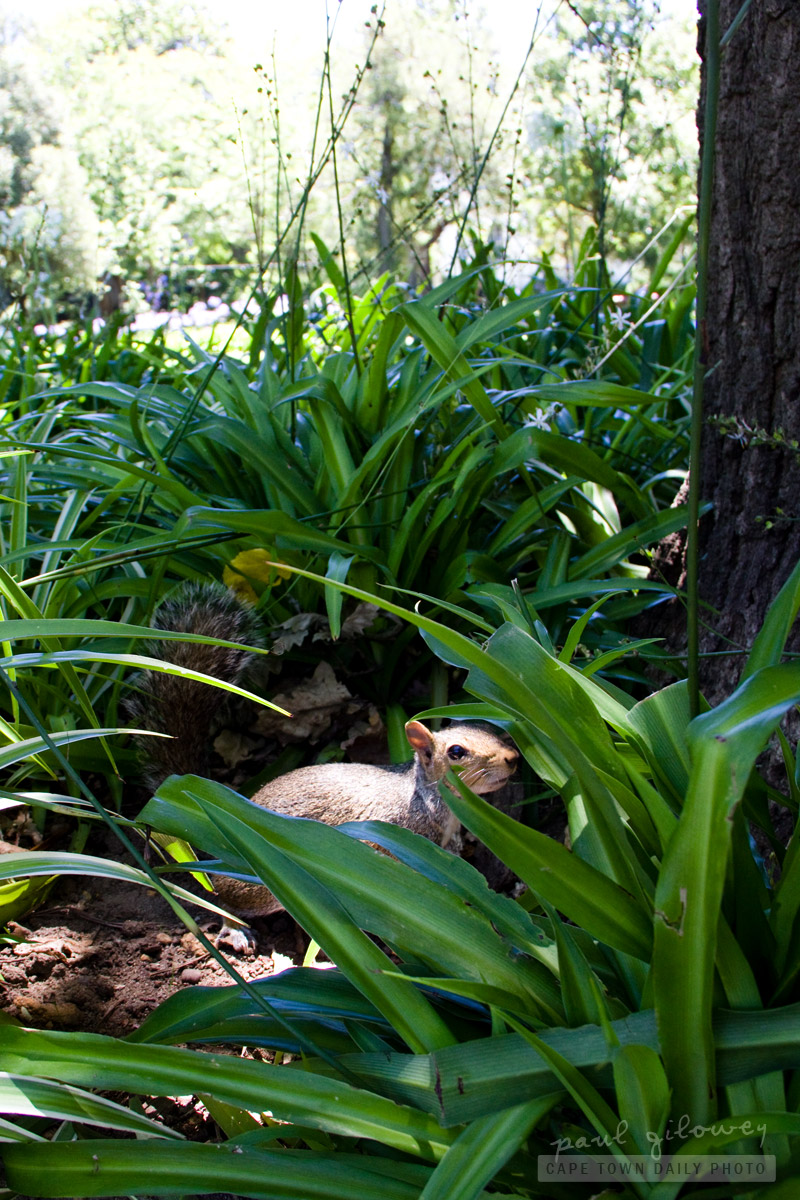
Some would suggest that the Greeks gave them the name "Shadow Tail" because they use their tail to provide shade in summer. Don't believe it though - I overheard from a friend of a friend of a friend that all squirrels are part of a secret society, a club (if you will), that goes by the name Legion of the Shadow Tails.
Yes. You should be worried. You just need to look at the pics below to know that they're up to something.
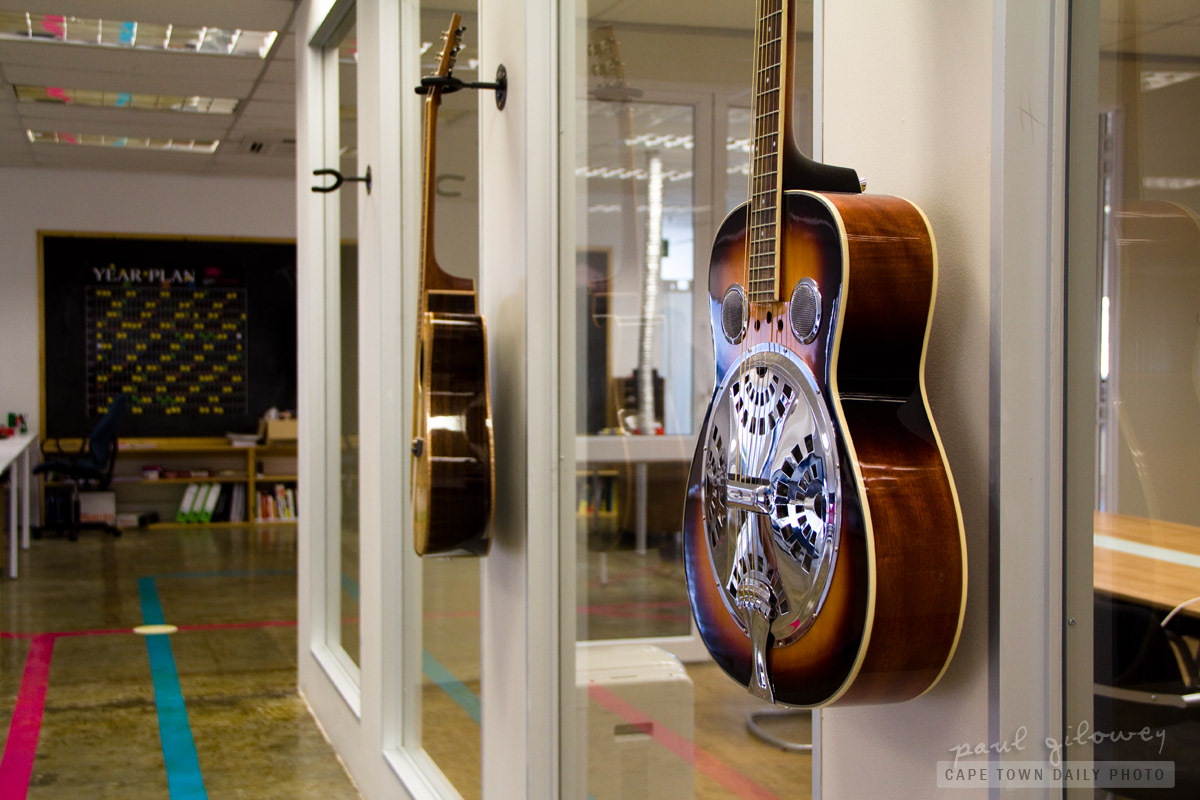
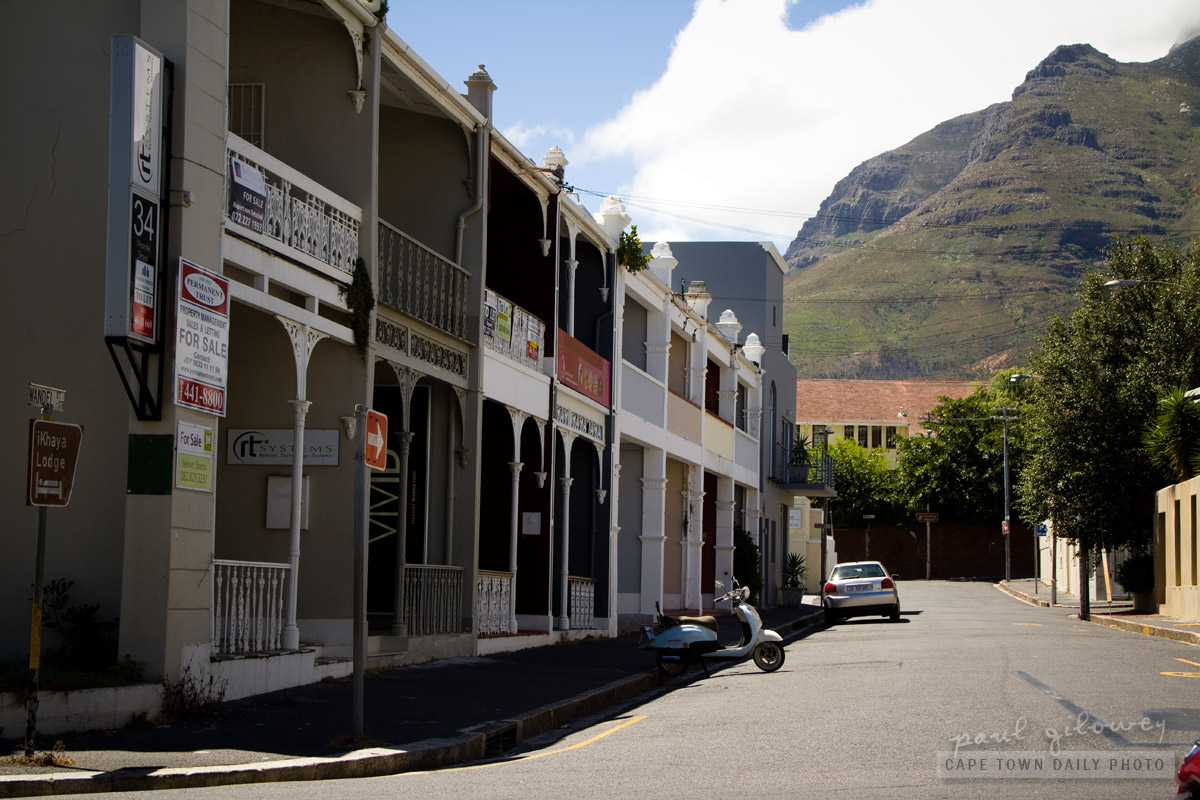
I visited GetSmarter's lovely offices in Observatory recently. Click on the last of the four photos below. Notice the polished concrete floors? Notice the scooter? Isn't that awesome? :D
So, Cape Town could help you take better photos because GetSmarter have offered our readers R500 off the cost of their part-time short courses in digital photography and Photoshop! The courses each include about 70 hours of learning (in the comfort of your own home) over a period of 10 weeks, and result in a certificate endorsed by the University of Cape Town. To take up their offer, click here and use "Cape Town Daily Photo" as the promo code when signing up.
P.S. If you're wondering, yes, I was tempted to take down the guitar and give it a whirl. ;)
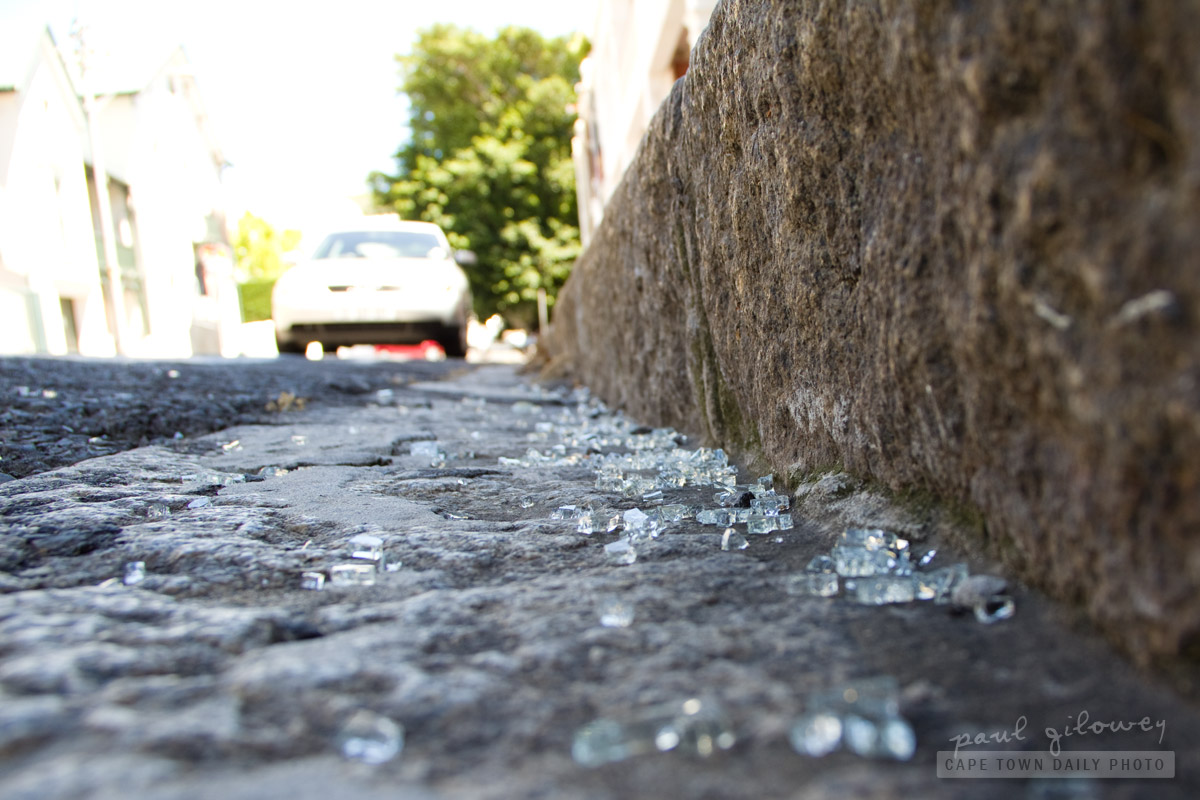
Some people in South Africa have opted to have a special plastic film, that prevents entire windows being easily smashed, fitted to their car's windows. Although this is mostly used as a deterrent for smash-n-grab type theft it may also make it more difficult for the smash-while-you're-away type of criminal.
I can't say that I've ever had my car broken in to in Cape Town. Have you?
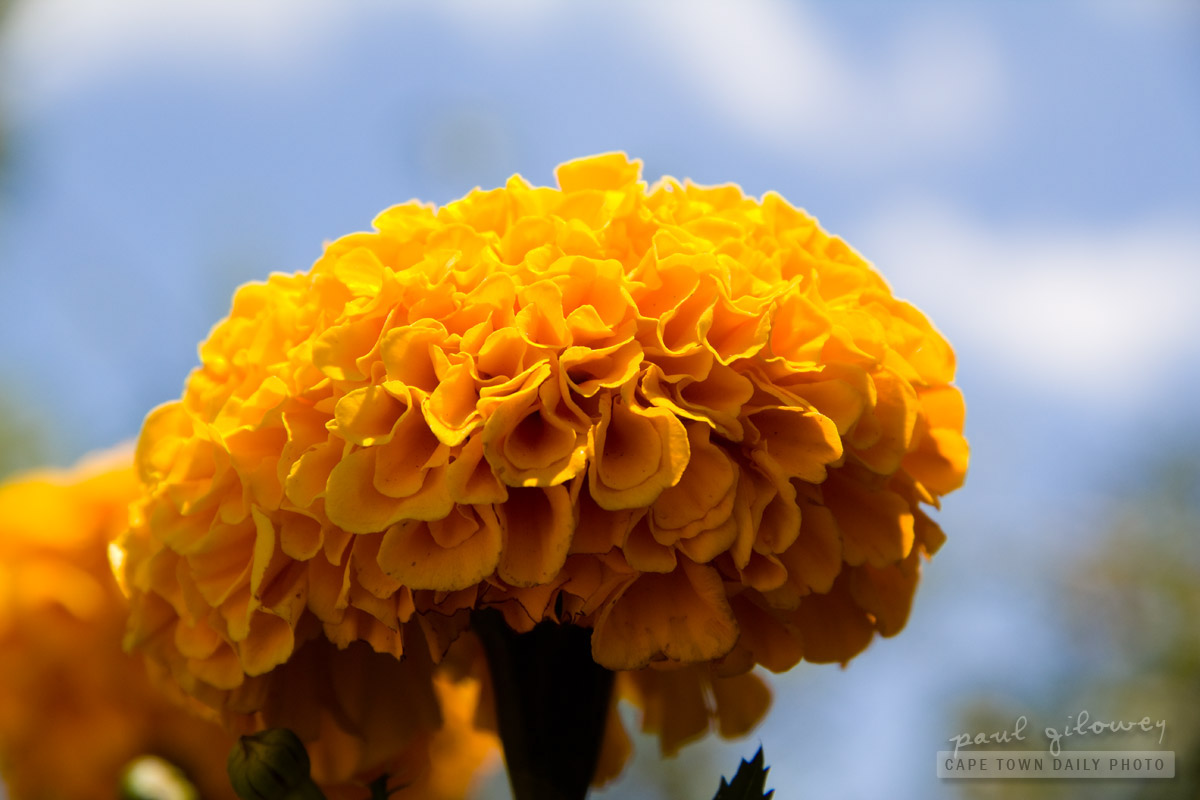
Isn't she pretty?
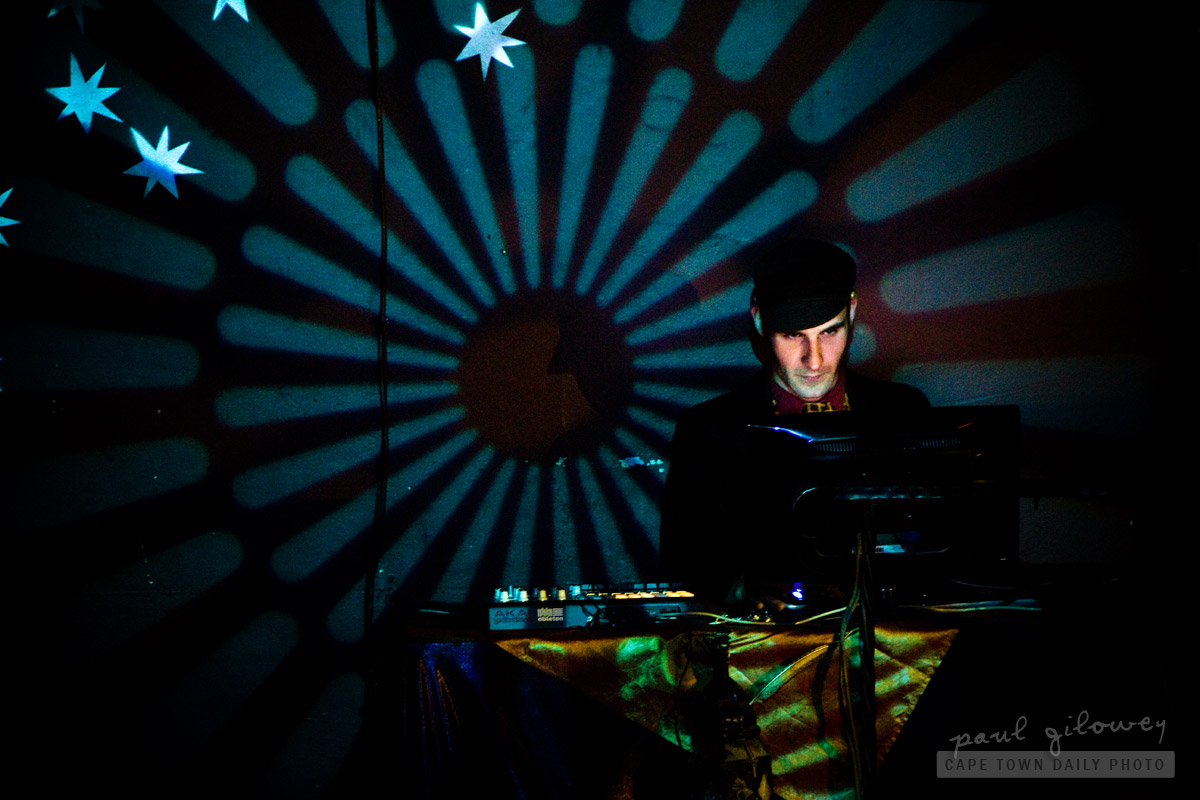
I took this photo at Vaudeville, a popular dinner/entertainment club in Cape Town.

If you're keen to visit, the gallery's open each day from 10h00 and closes at 17h00.
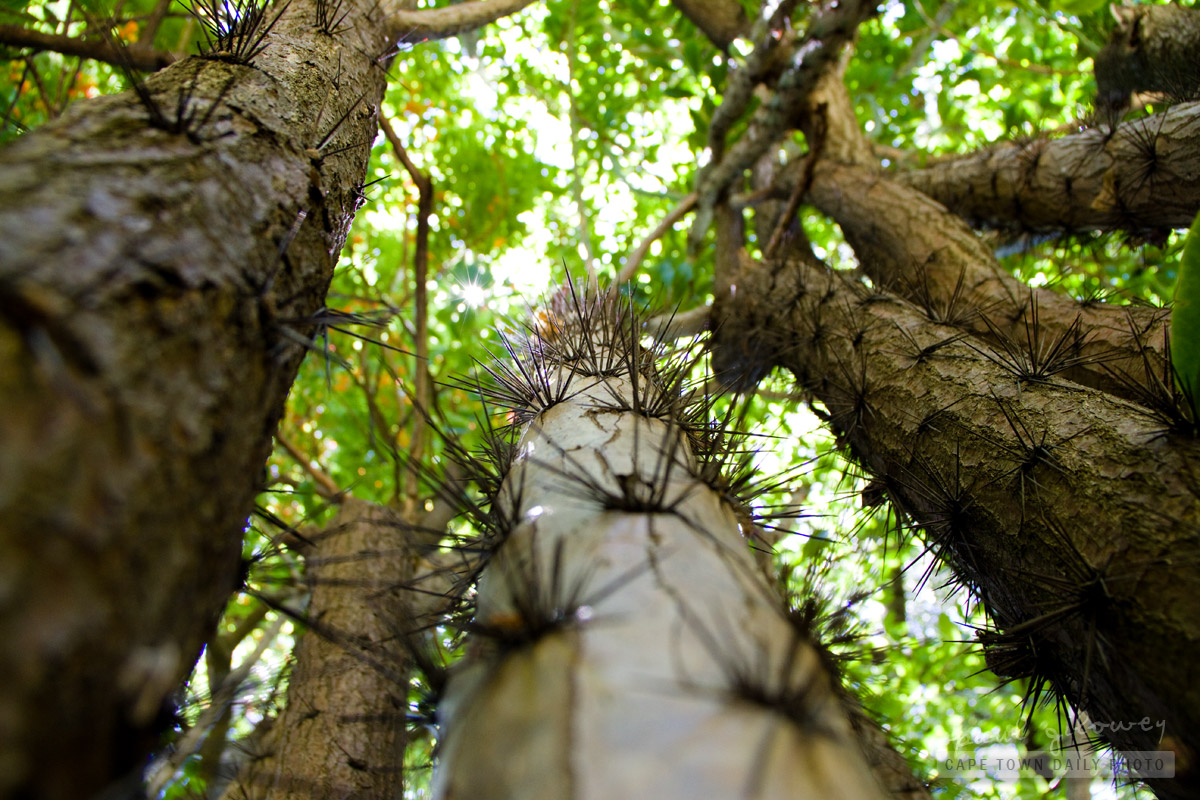
Speaking of deterrents... while in the Kruger National Park our guide pointed out a bush that defends itself from buck by releasing a bad-tasting chemical into its leaves if senses that too many have been eaten. The chemical is also released into the air (which in turn starts a chain reaction in neighbouring bushes, which in turn release the chemical into their leaves. Sneaky isn't it?
